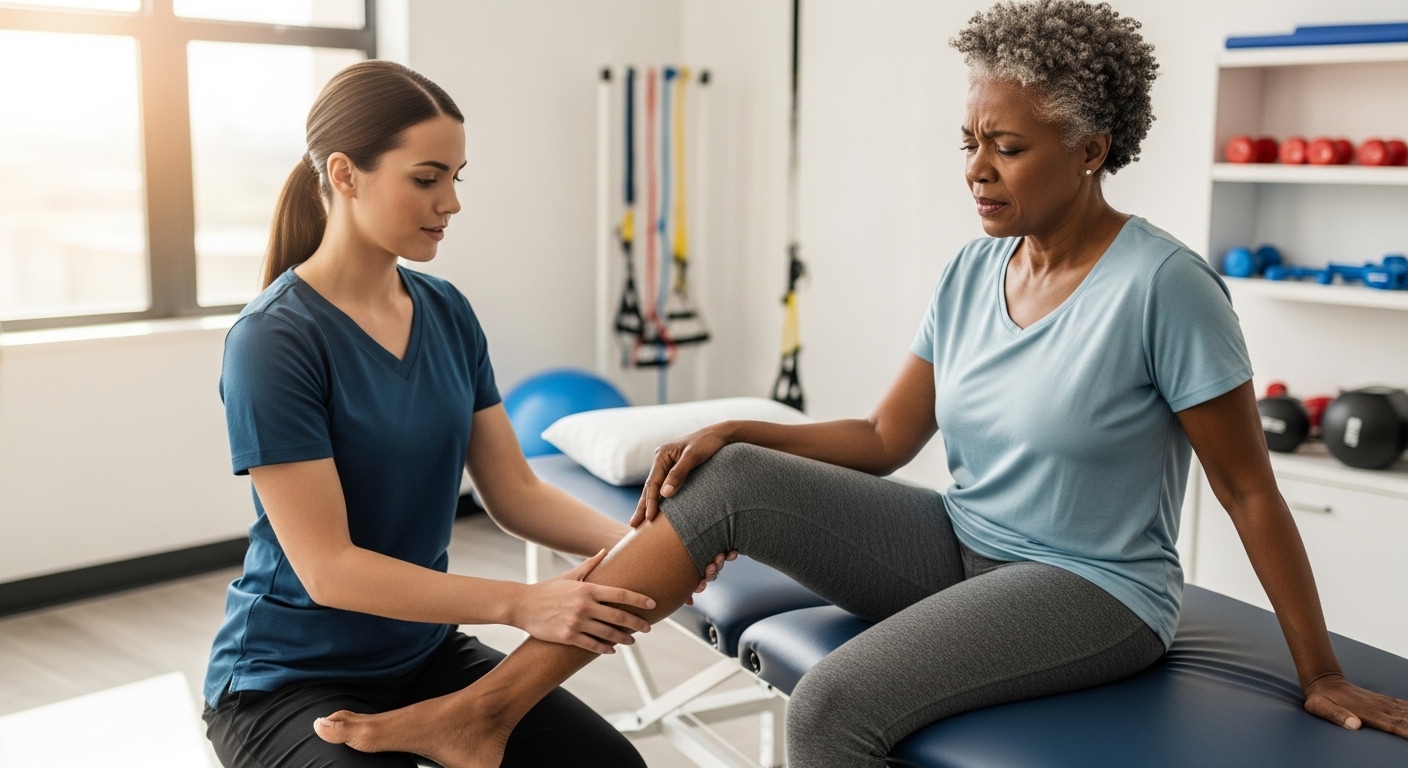


Does stress cause neck pain? The short answer is no! At PhysioCare Rehab and Wellness, we like to say “contributes to” instead of “causes.” The casual way healthcare professionals throw around terms can lead to confusion and, worse still, ineffective treatment. Fortunately, our highly skilled therapists know how to dig deep and find the root cause of your neck pain, and this information helps you find relief!
Let’s discuss Nicole, a 40-something-year-old working mother of three. Nicole was used to being very active, balancing her work schedule with getting her kids to all the various activities and school functions that come with being a mom nowadays.
Her neck pain first started as a crick in the neck when she woke up one morning. As the day progressed from driving her kids around to sitting at her desk, she noticed that turning her head became more difficult and painful, making focusing on work nearly impossible.
Nicole struggled to figure out why her neck started hurting and came to the conclusion that stress “must be” the culprit. The more pain and difficulty moving she had, the more convinced she was that stress was to blame.
Understanding Nicole’s Neck Pain
One of the most common things we hear from our patients is that their pain started for “no apparent reason.” Like Nicole, people will wake up with a crick in their neck or notice a stiffness turning when driving in the car. It is also common for people to notice tightness in their upper back and neck after a long day.
So, what is actually the source of the pain? In most cases, there is an issue with the neck joints or the neck muscles due to prolonged positions. Our neck joints don’t like remaining in any position for extended periods. In Nicole’s case, she first noticed her pain in the morning, which may have been related to her neck position while sleeping. It is also important to note that in Nicole’s case, the first sign of any issue was in the morning when she woke up, unrelated to stress.
As Nicole’s day progressed, her pain got worse. But this also was more likely related to how she held her neck while driving or sitting at her computer. In both cases, her posture, specifically how she held her neck, seems to have contributed to her pain. Prolonged sitting can lead to a forward head position, resulting in tension to soft tissue (i.e., muscles, tendons, and ligaments) or negative changes to our blood flow.
The muscles of our neck function best when we move them. So, holding her head in one position likely led to irritation of the muscles and affected her ability to move her neck, which in turn caused stress.
Stress “contributes” to neck pain because, when we experience stress, our bodies naturally respond by tensing up as a protective measure. This tension can lead to discomfort, particularly in the neck and upper back region. Research studies have found that individuals with higher stress levels reported increased neck pain as compared to those with lower stress levels. This is why we say “contributes” to, but not the cause of, neck pain.
How Physical Therapy Can Help Alleviate Neck Pain
We will target the source of your pain by performing a thorough examination, starting with your medical history and details about how, when, and where your symptoms began. As we saw with Nicole, determining how, when, and why the pain started helps us eliminate possibilities and get to the actual root cause(s).
Our therapists will also analyze your posture and movement to identify any limitations or restrictions contributing to your condition. We’ll use this information to design a program that addresses your specific needs.
Our treatment plans focus on relieving your pain and improving your posture, mobility, strength, etc., and educating you about managing your symptoms. Your program will likely include manual therapy (i.e., soft tissue work and/or joint mobilizations), targeted stretches, exercises, activity modification, or posture recommendations.
We’ll listen to your unique situation and specific issues and then work to help you find relief and get back to your normal routine.
Book Your Appointment Today!
If you're dealing with neck pain or looking for someone to help you figure out what is causing your issues, call us today and set up a consultation!
Sources: https://www.sciencedirect.com/science/article/pii/S1836955320301417?via%3Dihub, https://pubmed.ncbi.nlm.nih.gov/36180150/, https://www.ncbi.nlm.nih.gov/pmc/articles/PMC2270377/, https://pubmed.ncbi.nlm.nih.gov/28972599/

Separating Muscle and Joint Pain: The Key to Lasting Results
Do you notice tightness in your upper back and neck? Is it more tight on one side than on the other? The location and characteristics of your neck pain are valuable clues for our skilled McKenzie trained therapists at PhysioCare Rehab and Wellness to identify the likely culprit for your pain, which helps us guide you to lasting relief.
Ready to unlock the secret to lasting relief from neck and upper back pain? Don't ignore those subtle signs — reach out to our skilled physical therapists today, and let us help you resolve your pain once and for all!
Neck Pain — Muscle vs. Joint
It can be difficult for people to determine where their pain originates. One of the most common reasons people describe their pain is "no apparent reason." It often seems to come out of the blue or while doing the same everyday things you usually do.
You can use these clues to point you in the right direction:
- Pain on one side = joint pain. Although this, and all other clues, is not 100% true, it is a good starting point. Muscle tension tends to be on both sides of the neck and equally distributed, whereas joint pain is typically one-sided.
- Difficulty or inability to turn = joint dysfunction. Muscle tension tends to make movement uncomfortable or to feel tight on the opposite side of where you're turning towards (pain on the left when turning right). Joint dysfunction usually causes the inability to turn or the sensation of a blockage when turning to the same side as the pain (pain on the right when turning right).
- Pain that travels = joint. Muscles tend to feel tight and sore in the muscles themselves, compared to joint pain, which travels from the source of pain up into the head or down into the shoulder blade or upper shoulder area.
These clues can help us determine what is causing your pain.

Getting Ready for Yard Work and Gardening: Take These Steps
Enjoy the Process: Take time to appreciate your efforts and the beauty of your outdoor space.
Prep Your Tools: Ensure your garden tools are clean and sharpened.
Safety Gear: Remember to wear appropriate safety gear like gloves, sunblock, and a wide-brimmed hat to protect yourself.
Stretch It Out: Begin with gentle stretching exercises to warm up your muscles and prevent injuries.
Plan Your Tasks: Prioritize tasks by starting with lighter tasks before tackling heavy lifting or digging.
Proper Posture: Maintain good posture and bend your knees when lifting to prevent back strain.
Stay Hydrated: Keep a water bottle handy and take breaks, especially on hot days.
Know Your Limits: Don't push yourself too hard. Listen to your body and take breaks when needed.
Mulch and Weed Control: Apply mulch to reduce weeds and moisture loss in the soil, making future yard work easier.
Proper Lifting: Use your legs when lifting heavy objects and keep the object close to your body to reduce strain.
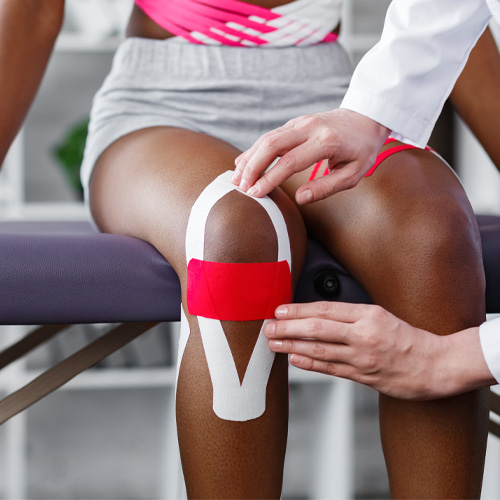
Follow These Simple Steps to a Pain-Free Life
Are you ready to embrace a lifestyle that promises better mobility and less pain? At PhysioCare Rehab and Wellness, we are here to guide you every step of the way, fostering a future where you feel better, move better, and live better!
Call today to schedule an appointment!
Your Success Is Our Priority!
Return to PhysioCare and Let’s Continue Your Journey to Wellness Together. Schedule Your Appointment Now!

Exercise of the Month
Shoulder Shrugs
(Neck, Upper Traps)
Stand tall with your arms at your sides, holding a dumbbell in each hand (optional). Slowly lift your shoulders up toward your ears in a shrugging motion. Hold briefly at the top, then lower your shoulders back down with control. 3 Sets, 10 Reps. (Materials needed: optional dumbbells)
Enjoy This Healthy Recipe!

Strawberry Lemonade Muffins
These are bright, citrusy, and packed with juicy bursts of fresh fruit. It’s exactly the kind of fun, fresh flavor you want to wake up to.
Ingredients
- 2/3 cup raw honey
- 4 large eggs, room temperature
- 1/2 cup coconut oil or 10 tablespoons unsalted butter, melted
- 1/3 cup whole plain yogurt (you can use a dairy-free yogurt if needed), room temperature
- 1/4 cup fresh lemon juice
- 3 cups almond flour
- 1/4 cup coconut flour
- 1/4 cup arrowroot flour
- 3/4 teaspoon baking soda
- 1 teaspoon baking powder
- 1/2 teaspoon Celtic sea salt
- Zest of 2 organic lemons
- 2 cups chopped strawberries
Instructions
Preheat the oven to 350ºF and adjust the rack to the middle position.
Place the honey and eggs in the bowl of a standing mixer and beat on medium-high for 5 minutes.
Combine the coconut oil, yogurt and lemon juice in a medium bowl. Slowly beat in the coconut mixture into the egg mixture.
In a large bowl, combine the almond flour, coconut flour, arrowroot flour, baking soda, baking powder, sea salt and lemon zest. Gently fold the flour mixture into the egg and lemon mixture. Gently fold in the strawberries.
Spoon the batter into a lined muffin pan. Bake for 16-18 minutes until just turning golden brown. Cool for 10 minutes. Serve.
Follow Us on Social Media!
April Word Scramble
Found Words (0/8):
💆♀️ Puzzle Clues
All 8 hidden words relate to Neck Pain & Physical Therapy. If you read our latest article, you'll definitely recognize a few of these!
- (5 Letters) The Connection: Dysfunction here usually causes pain on one side and an inability to turn to that same side.
- (6 Letters) The Tissue: Pain here tends to be on both sides of the neck and feels tight when turning the opposite way.
- (6 Letters) The Culprit: Often blamed as the direct cause of neck pain, but it actually just "contributes" to it by making your body react defensively.
- (7 Letters) The Tightness: The body's natural protective response to stress, leading to discomfort in the neck and upper back.
- (7 Letters) The Position: How you hold your head and neck while driving or sitting at a computer for prolonged periods.
- (7 Letters) The Treatment: A personalized plan that might include manual work, targeted stretches, and exercises to alleviate your pain.
- (8 Letters) The Movement: One of the key physical functions our specialists focus on improving, right alongside strength.
- (9 Letters) The Feeling: That tight sensation you might notice when trying to turn your head while driving or right after waking up.
How to play:
Read the Clues: Check out the "Puzzle Clues" section. Each clue describes a specific word related to Osteoarthritis, along with the exact number of letters in that word.
Spell the Word: Look at the 6x6 grid of scrambled letters to spell out your answers. Important note: You can use each letter in the grid more than once! If a word has double letters (like the two 'F's in Stiffness), you just need to make sure there is at least one 'F' on the board to use.
Submit Your Guess: Type the word you found into the input box and click the Submit button (or press Enter on your keyboard).
Track Your Progress: If your guess is correct, the word will automatically drop into your "Found Words" list. Try to find all 8 to win!
Completely Stuck?: If you just can't figure out that last word, click the Reveal Answers button to see what you missed (but it will lock the game, so use it as a last resort!).
Share Your Success Story

Your journey to recovery is important to us, and we’re proud to have been a part of it! If PhysioCare has helped you feel stronger, move better, or get back to doing what you love, we’d be honored if you shared your experience in a Google review. Your story could encourage someone else to take the first step toward healing!
Our Patients Get Great Results

"I have had an outstanding experience with Physiocare Rehab & Wellness. After injuring my shoulder, I struggled with strength, mobility, and everyday tasks that once felt effortless. From the moment I walked in, the team at Physiocare made me feel supported, understood, and truly cared for.
Their therapists took the time to listen to my concerns, thoroughly assess my injury, and design a personalized plan that targeted exactly what I needed. Each session was a perfect balance of challenge and encouragement, and I could feel steady progress week after week. They explained every exercise clearly, made adjustments when needed, and celebrated each milestone with me—no matter how small.
Thanks to their expertise and dedication, I have regained strength, control, and confidence in my shoulder. I am finally able to semi-return to the activities I love, pain-free and stronger than before. Physiocare Rehab & Wellness has truly made a difference in my recovery, and I could not be more grateful."